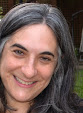
the professor speaks
Today's post is written by a guest blogger. He's Jeff Marcus, the photographer for Fiber Gathering... also known as "the professor" on this blog.
Regular readers of Joanne’s blog hear stories about me (in my recurring role as “the Professor”) on a regular basis, but this is my first blog post…ever. The final arrangements for the “Fiber Gathering” book deal came together quickly, and Joanne needed a trustworthy photographer, and she needed one fast! Perhaps even more importantly, she needed one who was willing to work only for food, and who could comfortably share a hotel room with her when she traveled to the festivals. Guess who quickly climbed to the top of the list? You guessed it, “The Professor!”
I didn’t come to the project without credentials. I’ve been going to fiber festivals with Joanne for years, and I always took a camera with me to help keep me busy while she schmoozed and shopped. I also have a PhD in Zoology, and I’ve been an avid amateur photographer for a long time. My primary focus has been animal, nature, and landscape photography since I was a kid (when I specialized in turkey photography…but that’s another story), and I use my images to illustrate my professional articles and public lectures. Since fiber festivals include lots of animals, I was well prepared for that part of the project. My strategy for photographing animals is pretty simple—let the personality of the animals come through. Goats are inquisitive, sheep are placid, most dogs want approval, baby animals are playful, and so on. So long as you let animals be themselves, it’s not too difficult to get a great shot.
(American Gothic Sheep)

Okay, to satisfy the gearheads (if you are not a camera-nut, just skip to the next paragraph, trust me); All of the photos in Fiber Gathering were taken with a Kodak DCS Pro SLR/n 14.4 megapixel camera, though I always had my Nikon FG-20 35 mm film camera as a backup in case anything went wrong. Both of these cameras accept the same Nikon lenses, which was handy. Most of the photos in the book were taken with an inexpensive, but incredibly flexible Tamron 28-300 mm f/3.5-6.3 XR Ultra Zoom lens, which goes from wide angle to telephoto in seconds. A few detailed close-up photos (of knitted cables, etc.) were taken with a Nikon 105 mm f/2.8 Macro lens (originally purchased for butterfly photography). Most of the photos were taken with natural light, some were taken with the pop-up flash on the camera, and some of the model shots were taken with an ancient Minolta Auto132x flash mounted on a Stroboframe Pro-T flash bracket. If you take a lot of portraits using flash, and you don’t have a flash bracket yet, buying one is pretty much the cheapest way to take your flash portrait photography to the next level.
 Enough talk about gear, I think. For most kinds of photography, the camera gear is much less important than the approach of the photographer. You can leap into a dynamic situation, cameras blazing continuously, and you will get one kind of photograph. And you can move slowly, framing shots, and looking for things that other people don’t see, and you will get a very different kind of photograph. “Fiber Gathering” required both kinds of approaches. Some situations, sheep dog trials, for example, required almost continuous shooting and hundreds of photos to capture a single image that would appear in the book. Other shots just required that I see something that others might miss, such as capturing the “bigness” of the Estes Park Wool Market by photographing profiles of the huge llamas they had there against the mountains of Colorado.
(Hard to photograph)
 The biggest challenge for me was taking photographs of people. I am a shy person, and for years, I have avoided portrait photography. It’s just not my thing. There are few things that have made me run away in panic faster than when several years ago a budget-minded friend asked me if I would be willing to be the primary photographer for her wedding! Still, for Joanne and for this book, I tried to rise to the challenge. Taking candid pictures of groups of people is very difficult (everyone’s location and expression has to be just right at the same time!), much easier are posed group shots, or candid and posed shots of individuals.

(Easy to Photograph)
Also difficult was trying to emphasize the beautiful garments on the models, rather than the models themselves. Some of the tricks that photographers use to make people look good (soft focus filters, certain flattering camera angles etc.) are out of bounds because the garments have to appear tack-sharp in the plane of focus in the final image. It helped that I was working with beautiful models who were patient enough to allow me to shoot and re- shoot until I found what would work for each of the knitted samples.

<--focus too soft for a knitting book
putting the garment first-->
My favorite shots, even though few of these wound up in the book, were pictures of the unusual foods available at the festivals. This is because at the end of the photo shoot, I got to eat the props. Remember, after all, that I do work for food.
<---lamb: It's what's for lunch!
Regular readers of Joanne’s blog hear stories about me (in my recurring role as “the Professor”) on a regular basis, but this is my first blog post…ever. The final arrangements for the “Fiber Gathering” book deal came together quickly, and Joanne needed a trustworthy photographer, and she needed one fast! Perhaps even more importantly, she needed one who was willing to
 work only for food, and who could comfortably share a hotel room with her when she traveled to the festivals. Guess who quickly climbed to the top of the list? You guessed it, “The Professor!”
I didn’t come to the project without credentials. I’ve been going to fiber festivals with Joanne for years, and I always took a camera with me to help keep me busy while she schmoozed and shopped. I also have a PhD in Zoology, and I’ve been an avid amateur photographer for a long time. My primary focus has been animal, nature, and landscape photography since I was a kid (when I specialized in turkey photography…but that’s another story), and I use my images to illustrate my professional articles and public lectures. Since fiber festivals include lots of animals, I was well prepared for that part of the project. My strategy for photographing animals is pretty simple—let the personality of the animals come through. Goats are inquisitive, sheep are placid, most dogs want approval, baby animals are playful, and so on. So long as you let animals be themselves, it’s not too difficult to get a great shot.
(American Gothic Sheep)

Okay, to satisfy the gearheads (if you are not a camera-nut, just skip to the next paragraph, trust me); All of the photos in Fiber Gathering were taken with a Kodak DCS Pro SLR/n 14.4
 megapixel camera, though I always had my Nikon FG-20 35 mm film camera as a backup in case anything went wrong. Both of these cameras accept the same Nikon lenses, which was handy. Most of the photos in the book were taken with an inexpensive, but incredibly flexible Tamron 28-300 mm f/3.5-6.3 XR Ultra Zoom lens, which goes from wide angle to telephoto in seconds. A few detailed close-up photos (of knitted cables, etc.) were taken with a Nikon 105 mm f/2.8 Macro lens (originally purchased for butterfly photography). Most of the photos were taken with natural light, some were taken with the pop-up flash on the camera, and some of the model shots were taken with an ancient Minolta Auto132x flash mounted on a Stroboframe Pro-T flash bracket. If you take a lot of portraits using flash, and you don’t have a flash bracket yet, buying one is pretty much the cheapest way to take your flash portrait photography to the next level.
 Enough talk about gear, I think. For most kinds of photography, the camera gear is much less important than the approach of the photographer. You can leap into a dynamic situation, cameras blazing continuously, and you will get one kind of photograph. And you can move slowly, framing shots, and looking for things that other people don’t see, and you will get a very different kind of photograph. “Fiber Gathering” required both kinds of approaches. Some situations, sheep dog trials, for example, required almost continuous shooting and hundreds of photos to capture a single image that would appear in the book. Other shots just required that I see something that others might miss, such as capturing the “bigness” of the Estes Park Wool Market by photographing profiles of the huge llamas they had there against the mountains of Colorado.
(Hard to photograph)
 The biggest challenge for me was taking photographs of people. I am a shy person, and for years, I have avoided portrait photography. It’s just not my thing. There are few things that have made me run away in panic faster than when several years ago a budget-minded friend asked me if I would be willing to be the primary photographer for her wedding! Still, for Joanne and for this book, I tried to rise to the challenge. Taking candid pictures of groups of people is very difficult (everyone’s location and expression has to be just right at the same time!), much easier are posed group shots, or candid and posed shots of individuals.
(Easy to Photograph)
Also difficult was trying to emphasize the beautiful garments on the models, rather than the models themselves. Some of the tricks that photographers use to make people look good (soft focus filters, certain flattering camera angles etc.) are out of bounds because the garments have to appear tack-sharp in the plane of focus in the final image. It helped that I was working with beautiful models who were patient enough to allow me to shoot and re-
 shoot until I found what would work for each of the knitted samples.
<--focus too soft for a knitting book
putting the garment first-->
My favorite shots, even though few of these wound up in the book, were pictures of the unusual foods available at the festivals. This is
 because at the end of the photo shoot, I got to eat the props. Remember, after all, that I do work for food.
<---lamb: It's what's for lunch!
Labels: blog tour, Fiber Gathering, photography
posted by Joanne at 9:17 PM
13 comments