Wednesday, November 16, 2016

Wovember and a quick trip to Crete

I have been unable to keep up with Wovember this year the way I have in years past....so today I cruised over to the website to try to catch up to all things wool in November.  (It's a site that celebrates wool and its uses; it's an intense November experience every year with a post or two every day!)  Anyway, imagine my surprise when I discovered that my blog was a part of this post on Crete.

How funny to see my name and my writing quoted...I feel honored!

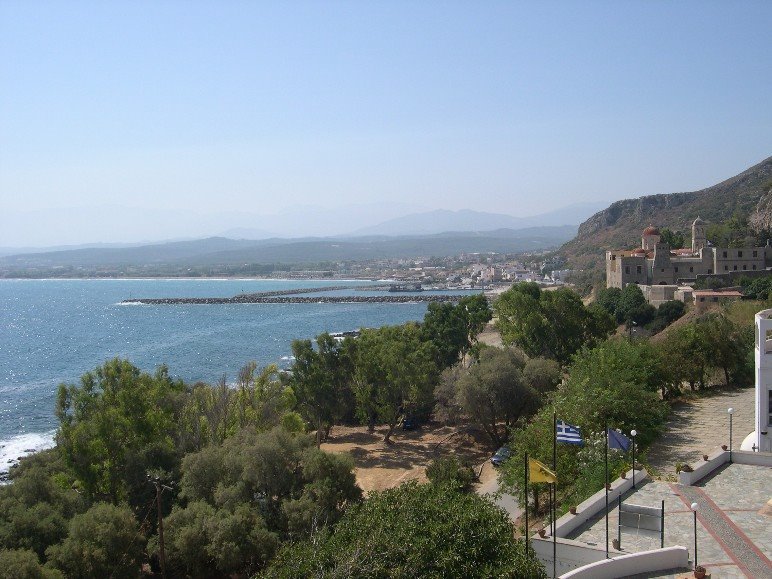
Anyhow, it is getting colder every day in Manitoba, and today was a damp, dark and nippy dog walk at 7.  So, as a little respite, here are a couple of photos from those old posts about Crete...

Click here and go back to read more about my journey in Crete...

(And, as I explained to friends later, the only bad part of the trip(s) we've made there is how FAR it is from North America!)

Labels: , , , ,

Sunday, January 10, 2010

rearing its ugly head

You may remember that back in September, I posted about a special congregation in Crete that I visited named Etz Hayyim.
I just heard that this historic synagogue was the victim of a hate crime. Here's the link to the article:

Greek Synagogue Suffers Arson Attack.

There is a way to support the congregation online here. I am also looking into how one might be able to send a smaller contribution, if that is possible. (I'll explain that here if I can figure it out.) It seems like a good way of supporting an important historic religious place and showing that good people can stand up against hate.

Update: Here's what I've found out:
In North America, checks may be sent to...
International Survey of Jewish Monuments
Attn: Sam Gruber
PO Box 210
118 Julian Place
Syracuse, NY 13210
Please be sure to note on your checks that it is for Etz Hayyim Synagogue in Hania.

The ISJM is a registered charity (for more information you can see their site www.isjm.org).
Photos of some of the destruction can also be seen on this site here.

One thing I've realized since moving is how much I censored myself (even on my blog) when I lived in Kentucky. I had many awkward moments - but not hateful ones- and ignorant comments directed my way while I lived there. Those awkward things might be expected in a place that wasn't always worldly or diverse. That wasn't any kind of hate act, but it was sometimes hard to cope with on a daily basis. In order to avoid embarrassment of others, I tried not to bring up things that caused these misunderstandings.

I also got some scary hate mail and phone calls which were more serious. In part, it was because I wrote occasionally on religious topics in newspapers and other publications. In part, it was because I was different, with different religious beliefs, politics, or values. Some people thought it was ok to say intentionally cruel and inappropriate things on the basis of that difference.

This was a difficulty for me in my work life. Did I choose not to speak or write about certain topics (for instance, Religion, despite the fact that I'd gotten a graduate degree in Religious Studies) to avoid this kind of non-constructive feedback?

Sadly, over time, that's what I ended up doing...I chose to write on mainly "safe" topics. I've become more reserved and careful generally because of this, I used to be much more open. I also carried around a constant tension that I found hard to explain. I always wanted to believe that good people, religious (or non-religious) people, did not do cruel or hateful things intentionally. Also, those same good people (I hoped) would not stand by as others chose to do such things. It was sometimes hard to reconcile what I wanted to believe with the things that happened. I will rely here on one incident here as an example...but sad to say, there were others.

(I am purposely being vague here--and will try as hard as I can not to give specifics, as I have reason to believe that may only cause more harm. I am even avoiding key words that would draw additional attention.)

Since moving to Winnipeg, I am much more relaxed. This a diverse place--it's also a very tolerant and inclusive place. In fact, I've even had teenagers here ask me to describe what some of these anti-Jewish experiences were like! These kids couldn't imagine being the only "different person" in their school class or on their block because of their religion,race or ethnic background. How lucky, I thought, to be raised in a place where one only reads or watches movies about hate. How surprising.

Telling stories about any kind of hate can be sensationalist. It can glorify the wrong things. So, I try to celebrate the good stuff (and good people) as much as I can.

So, I know about this spiritually rich and historic congregation. It's hidden on a back street in a part of Hania in Crete. When you sit in one of the pews, you get a beautiful feeling of serenity and peace. Check out the links, if you get a chance, and read a bit about my visits there. If you feel so inclined, maybe you can help monetarily support their recovery from an arson attack.

Thanks for helping me speak out against hate.

Labels: , , , ,

Tuesday, September 22, 2009

That last post from Crete

It's exactly a month ago that we left for Crete...and we've been back home in Winnipeg since September 3rd, so this will be the last vicarious vacation post. (Sadly, I have lost all of the magical Greek vacation feeling to errands and house repairs, etc. Better find time for a Greek coffee or something, I guess!)

The last time we were in Crete, in 2006, I wrote this post. It said a lot of reflective things. Surprisingly, I found myself getting ready to post something very similiar, so I'll be quoting some from that post this time!

In Chania, and in Crete generally, there are layers of history, religion, and culture. They appear like this door--an entryway into a past and a history that is hard to understand for a person from the New World. This doorway (probably to a Venetian townhouse, or maybe Ottoman era?) is chained, but you can see right inside the building. The building is basically abandoned and in ruins. It's empty, just waiting to be restored...and since it's a townhouse, there are thriving businesses and houses right near by. It's part of the magic of Crete. Honestly, I can't figure why the new holiday homes are being built far out of town when there are places like this left to be restored right in town!

One of our stops in Chania was to go see Etz Hayyim. (check out that website, it's fascinating!) We happened upon this synagogue the last time we were in Crete, and here's what I said about it then:

"Crete had a very old Jewish community, thousands of years old, but when the Nazis occupied Crete, they rounded up the 300 Jews on the island and put them aboard a ship to Auschwitz Concentration Camp, along with hundreds of Cretan members of the resistance. The ship was torpedoed by the English and everyone perished. (at least they were saved the inhumane death by deprivation at the camps. Baruch Dayan Ha-Emet*)

**Baruch Dayan Ha-Emet is Hebrew. It means, "Blessed is (G-d) the righteous Judge." It's said in traditional Judaism whenever one hears of a death--because only G-d decides when it is someone's time to die.

The synagogue was immediately looted and taken over by squatters. Over the years, there were stray animals, a chicken coop and dumps on the site of this congregation. In the mid to late '90's, an international and local inter-faith effort was made to restore the synagogue, because without this restoration, the Nazis would have succeeded--erasing thousands of years of Jewish ritual and culture."

This time, we returned to visit the building again. I'd found it an extremely moving place. Somehow, one could sense the centuries of people who'd been there, worshipping, celebrating with family and friends, and mourning, too.

I took a few more photos of things that I found interesting or moving. This is the courtyard, which I mentioned last time:

"Generally, Jews bury their dead in cemeteries away from places of worship, but during a time of political unrest, several very esteemed rabbis were buried in one of the courtyards within the walls of the congregation. The date of the earliest seems to be 1710, and we were able to visit this grave, too."

"There are now daily prayers again with mixed seating, and it's a peaceful sanctuary, sheltered in a verdant courtyard. There's an old alcove in the wall for ritual handwashing."

"There is a library filled with books on religion, in many languages, in an area that used to be one of the women's sections." (Historically, Jewish women and men sat apart during religious services. Today, this is only true for more traditional, Orthodox services.) This gallery, with the lattice screening, is an architecture that is borrowed from Islamic tradition...a separate area for women to sit and see what is happening without being a part of it. (not all Jewish women's sections look like this--it varies from country to country and culture to culture)

"There is a restored mikveh, a ritual bath, that was so inviting that I wanted to use it....Apparently it is still used by brides and there is room there for a traditional Middle Eastern Henna party for the bride, which used to be usual in Crete." (This is the photo of the ritual bath. The stick at the entry is to keep tourists from walking into the water! To the right, there is a long bench seat built into the bath for the female members of a bride's family to sit.)

"There are very few Jews in Crete now. The area around the synagogue was, at times, a ghetto where Jews were forced to live, but while the old buildings still remain, there are no traces of that civilization left."

I feel a bit bittersweet about ending the vacation with this posting, but it was one of the last things we did in Crete on our way home! Commemorating tradition is sometimes a thing of mixed emotions. Here's what I said in my 2006 post:

"I was really touched, enriched, and affected by this trip. In many ways, it helped reinforce much of the history I studied in college and in graduate school. I saw interfaith and intercultural dialogue in a tangible way that is hard to gather from graduate seminars and old microfilm. Yes, I'd studied much of these historical occupations and cultural exchanges, but in Crete, you can see it in the people, in the landscape and buildings, and in the daily custom. This is a Greek Orthodox environment where one can eat a meal in an old Turkish Hamam, look at Christian art influenced by Islam, and see Jewish traditions, distinct and yet influenced by the Muslim and Christian environment around them."

The most important thing I gleaned from a second trip is the layering and richness of that deep cultural and religious exchange. I saw it in the textiles at the Sitia Folklore Museum, and even further in the food traditions. I've read more about Mediterranean and Middle Eastern foods since then, and I saw even more in the mingling on menus this time. (Menus written in Greek, English, French, German, and Italian!)

I hope you've enjoyed hearing about my trip to Crete! I'm off to make a Middle Eastern roasted eggplant salad as part of our supper...I bring a little more of Crete home with me each time we go.

Labels: , , , , ,

Wednesday, September 16, 2009

Sitia Folklore Museum

It turns out that we happened upon one of the best folk museums in Eastern Crete while we were in Sitia. (Both of those links are to other descriptions of the museum.) When you come upon the museum, it's as if you're being welcomed into a traditional home...complete with high walls and an interior courtyard outside the house.
The museum, started in the mid-1970's, was created by a cultural club. They simply went around collecting donations from people in Sitia. Up until then, many people had continued to use the things that are now in the museum. There are several different exhibits, including a traditional 19th century working class kitchen, a bedroom, a fiber arts room, an upper class bedroom, and a display of tools for working, including displays about raisins, olive oil, and other traditional village activities.
The woman who spoke with us in the museum is relatively young, in her late 20's or early 30's. Despite the lack of financial support, she chose to move to Sitia from Athens, live with her grandmother, and help support the museum's mission. She was very impressive, well educated and eloquent. The details were fascinating...this is a photo of the floor design in the kitchen display. None of this was a reproduction--these artifacts came straight from members of the cultural club and the surrounding community.
The kitchen was filled with interesting tools for cooking in a rural environment, including a hand operated grindstone for making flour and a sifter for sorting it once ground. There were gourds for storage and clay pots for olives and oil.
Although the house itself was spotlessly clean and used as an exhibiting area only, you could tell that the tools themselves had been well used. There was an air about the place--it felt a bit like a very good housewife, efficient, clean and proud, had just stepped out. The linens were bright and clean, and the tools were all within reach and functional. There were no guard rails or ropes to keep tourists away from the displays, either. No one took advantage of this or harmed anything while we were there.
The textiles were all hand done in some way. There were heavy woolen coverlets and hand embroidered towels for washing. Women in rural areas weren't educated, so one of the ways they showed their competence was through a flawless ability to create beautiful needlework. The young women created a lot of textiles specifically to prove their worth for when they married.

One of my favorite stories, told to us by the young guide/curator, was about the process of weaving Gregefi (sp?) work. This is a complicated counted process which produces a reversible pattern in weaving. It requires a lot of concentration to do it right...and it's a beautiful technique. When a husband disrupted his wife when she was doing this counting of warp threads over her loom, she'd say, "What! Can't you see I'm doing the Gregefi here?!"
Today, apparently people still use this phrase in a joking way. When a man doesn't want to do something in the household, or acts as though his work is so important that he can't help out, a woman might say, "What--are you doing Gregefi or something?"
For those of us who get a little too absorbed in our knitting at times, this sounded entirely familiar!
The "weaving" room of the museum was so perfectly done--it made me long to bring people there and to use it as a teaching tool. Crete had small household amounts of silk and cotton for spinning and weaving, as well as larger amounts of flax and wool. There were small displays for each of these processes and each was absolutely correct and well done. There were displays of naturally dyed yarns, hand dyed and woven coverlets and other textiles, and even an area where silk reeling was displayed.
Crete is in an interesting transition period--older women ("grandmothers") still know how to
do all these traditional skills. Some of them still spin and weave. However, they aren't all that eager to pass along these skills, seeing no use for them in the modern era. Their children and grandchildren aren't interested in learning them. Yet, there are some who know that if they don't pass along the traditions, they won't be there for the future. It's something that's ripe for research, as the Cretan textile traditions are fascinating.
The loom shown here had an ingenious leather strap system for treadles. It would be reasonably easy and possible to create more string heddles and add on additional leather straps as the pattern required. It seemed like the original 4 now, 4 later version for those of you who understand modern looms! It's been a long time since I wove, but I saw the immediate appeal of this beautiful handmade loom.

Just as we were leaving the museum, the current president of the cultural club came in and met us. We had a fascinating discussion (she spoke in Greek, I spoke in English and the young curator/tour guide translated as necessary) about the Turkish influenced designs. Crete was first occupied by the Venetians and then by the Turks. (the Ottoman Empire) I've studied many of the Turkish sock patterns that Anna Zilboorg has researched,and gosh, I saw the same motifs in this museum! It was amazing to see the same patterns reproduced in weaving and embroidery.

Are you interested in more info about Crete? I have perhaps one more post's worth of photos. After that, I'll have to go back to "regular" life here in Manitoba. So far this week, I've picked eggplant, peppers, tomatos, swiss chard and cucumbers at a U pick farm and I met a family of new Iraqi immigrants there. I've also had several other adventures...what would you like to hear about next?

Labels: , , , , ,

Sunday, September 13, 2009

spinning along

I'm stretching out this vacation (in my mind) for as long as I can this time!) That's because my daily life, while good, is full of things like laundry and house repairs and moving details. So, vacation is good. Let's keep talking about Crete!
It wouldn't be vacation without finding fiber arts things everywhere we went. Let's start with, say, spinning wheels. There aren't a lot of spinning wheels on Crete; it's not a strong part of their spinning tradition. Spindles are shown in museum exhibits, but not wheels. However, when we were in Chania, at the very end of our trip, we were shopping for knives. Cretan knives are well known for being nice tools, and for someone who cooks lots (me) a handmade paring knife or two is a great souvenir. That said, last time we focused on a bone handle--this time, we were happy to take plastic. Plastic is easier to clean, it's all recycled from something else, and the bone was a lot more expensive. We were paying for the knives when we saw this wheel behind the counter. The flyer and bobbin were on the floor next to the wheel and the cost? 250 Euros. It was a wheel I didn't need, but an antique spinning wheel, in any event!
Ok, now back to the goats... we left our car park in Myrtos (next to the goats) and took several driving trips. We went to Sitia, a city in Eastern Crete, one day. This is a pretty large, bustling place with a lot going on. Our first focus was olive oil--Sitia has some of the best in Crete-- and a good meal at the Balcony, a great restaurant. What we discovered was that the olive oil was available at the grocery store in Myrtos, so we didn't need to drive so far! The restaurant was nice, and...we found a yarn shop. We'd found others, but unfortunately, most are only open in the mornings, so I'd missed going into one. Crete mainly focuses on embroidery and lace crochet now, but I got some nice worsted weight cotton (like Tahki Cotton Classic) at a yarn shop in Sitia. I had the help of a kind Greek American woman who was also a tourist. She was from New York City, spoke very functional Greek and helped me get just the colors (navy and sage green) I wanted!
The trip was made entirely worthwhile by a super trip to a folklore museum in Sitia. I will post on that soon--it deserves its own post, it's an amazing museum.
When we left Myrtos, we chose to stop in a town called Kritsas. It was described as the "biggest village in Crete" and as having some nice arts and crafts. It was actually more of a town than a village, fairly touristy, but very picturesque. (click on all these photos to embiggen, it's worth it!)
As we walked through the town, we heard a sheep's baa and the professor caught a photo of this...looks like this farmer was either transporting these sheep to another farm or to market. They are hogtied, which means their legs are tied together, to prevent them from jumping out of the bed of the truck. The sheep didn't appreciate this (lots of baaas!) but it didn't hurt, from what I saw. It seemed like a logical way to transport sheep in this very hilly terrain. ..otherwise, they'd just leap right out of the truck bed! Also, one could note here that sheep on Crete are a special and primitive breed. Very tough, wily and clever, they provide milk, meat and wool--a true triple purpose breed.
There are lots of textile shops in Crete with embroidered table and bed linens--sadly, most of these aren't hand done anymore, and probably not made in Crete. However, as I walked up through the town, peering into the shops, I saw what could only be a distaff, loaded with wool, and a spindle. I rushed into that shop!

Most women on Crete don't spin or weave anymore. In fact, spinning and weaving were common on the island up until at least the '70's, but today, there's not much need for it anymore, with the improved availability of commercially made goods. However, this lady showed me with very little English, that she spun and wove for her own pleasure. When I showed her I too spun, she was tickled! She got out her handwoven blankets and sacks to show me. They were gorgeous! All single ply yarns, spun with the coarse wool of Crete.
When I tried her distaff and bottom wool spindle, I saw what well-made and beautiful tools they were. Well balanced, and handmade! She explained that they were hers, she had none for sale. She also showed me her handmade wool combs (a lot like Viking combs) that she used to process the wool herself. She did a beautiful job of that, too.
Before we left, she showed us another traditional skill. The cords used on handwoven sacks are braided/woven on a distaff like stick. The stick is tucked under one arm, and the little prongs or branches at the end are used to separate strands of yarn. The braiding is done with both hands free--this could obviously be done while walking or tending children.
I was sad that we didn't have enough language in common to talk further...but thrilled to see someone spinning for fun in Crete. What a universal language we spinners/knitters/fiber arts people have!
...more about the folklore museum next time...I'm off to make a traditional Southern cole slaw for the Biology picnic! (in Manitoba, it might seem exotic!)

Labels: , , , , , , , ,

Thursday, September 10, 2009

In my mind, I'm going to Crete...

If you're from, say, Virginia, and have a degree from UNC, it's hard to get away from James Taylor's Going to Carolina. So, oddly, when I found myself humming this song the other day while walking my dogs (at 6 AM), strange that I was thinking of Crete! Maybe that's because I'm still jetlagged, so a dark sidewalk at 6 AM feels like mid-day in my body...

OK, back to the trip. We left the big city and headed towards Myrtos, a small town on the south-east side of the island of Crete. This is what the parking lot looked like for our hotel. Note the goats... it was just a little walk down a couple of flights of steps to the beach.

You may wonder what you see on a long drive in Crete. Here are some of the sights. We took the biggest road in Crete, called the "National Road." It is usually somewhere between 2-4 lanes in both directions. There are fruit vendors and tavernas right alongside the road; easy to pull off and grab a coffee or an orange juice if you know where they are ahead of time. (big if, we didn't pull off once!) The driving on this highway is speedy like a racetrack with lots of twists and curves. We stuck to the very right side of the road! Other than this road, things are relatively unimproved. A lot of roads are paved, and may even have up to two lanes, but it's not uncommon to have goats on the road or have the whole road sort of peter out into a set of steps in a village.

The truck in front of us here on the road is filled with grapes for raisins. Crete produces a lot of raisins, and it's a really labor intensive process. We had the process explained to us in a museum, but it was much more real when we were behind this truck on the highway!

Summer is the dry season. Crete is very lush and green at other times of the year. However, when it is dry, it's easy to spot the furry inhabitants of Crete! This donkey was hanging out in a clearing right near a big intersection near the National Road. It was a very big donkey...it's hard to tell in this scenery, but he (she?) had some size on him!

Goats are often free range in Crete. This one was very high up on a mountain above the coast road near Myrtos--eating whatever greenery was left.

While we were in Myrtos, we spent time on the beach, swam in the sea, and ate well. There were open air tavernas along the beach, and it was a great spot to watch people go by. Evenings were especially wonderful. The children in town would set up plastic milk crate "stands" and put out pet rocks and trading cards "for sale." They played at shopkeeper and raced back and forth setting up stalls and taking them down. Then they got on their bikes, (all with training wheels) chasing each other (gently) up and down the pedestrian walk way, honking their horns and ringing their bells. Puppies and children ran up and down the beach, sometimes getting in one last swim. Best was the pair of little boys, one sporting sunglasses, who went fishing at dusk together. They didn't let the sunset or the dark get in the way of the sunglasses look!

We stopped along the highway to see these ancient mills. They've recreated how the mills worked along this road, so you can see how the wooden spokes would have turned the gristmill inside through windpower. Turns out wind power is a pretty ancient energy source! There are other mills on hillsides, but they lack the wooden spokes, so you need to know what to look for in terms of building shape when you glance up.
This historic site (and gift shop) was closed when we stopped on a Sunday, but still very picturesque. It was clear how the mills worked, as well. One of the other buildings was for sale, too! (need a new life? How about a grist mill in Crete?!)
Meanwhile, back in Manitoba, it looks like I am lining up some teaching opportunities for later this fall at a local yarn shop. Also trying madly to learn about how things work here--details about health care, car repair, chimney repair, eavestroughs...we're working flat out again on learning about life in Winnipeg. Still, it's nice to return to vacation "in my mind" on the blog. In my mind I'm going to Cre--e-te...can't you just feel the sunshine? Another post to come in a few days...

Labels: , , , ,

Tuesday, September 08, 2009

Crete and elastic time

Time is elastic like a rubber band when you have jetlag. On one hand, we've accomplished a ton since coming home...a Manitoba driver's license and license plates for me, a lot of errands and house fix-its, canning chutney and plum sauce, etc. On the other hand, it took me 4 days to get the camera, its battery, and the little cord that hooks it up to my computer in the same room. It took me a while to upload photos...and thus, I've delayed telling you about all the Greek adventures.

Oh, and we got our luggage back, no problems, it was only a day long excursion to Chicago, apparently.
Now I'll narrate all these photos. At the conference the professor attended, they always have a traditional Cretan dance performance on the last night, including live music, lots of raki to drink, and friendly companionship. The professor and I enjoyed it all but went to bed relatively early, which was all for the best!

One thing that occupied me during the conference was a small black puppy that was living on the beach below the conference center. It had been abandoned and had created a den for itself in the vegetation on the beach. It didn't let me get close, but it did allow me to feed it quite a bit of meat--I left it, like offerings, right near its den. An old man who spoke about 5 languages (but not English) told me, in French, that yes, the puppy was being well-fed. Hopefully someone will be able to coax it out and give it a home.

After the conference, the professor and I had a few days of holiday on our own. We rented a car and headed to Rethymnon for a night.

In Crete, history lives right alongside modernity. So, you can see a Venetian townhouse (from the Venetian occupation) right next to an Ottoman-era mosque (Turkish occupation) or graffiti or a kids' playground. It's a really interesting hodgepodge of ancient and modern.

Gardens also flourished right in town. From our room on the third floor of an old Venetian dwelling, we can see the city, the mountains beyond, and this amazing empty lot, made into a huge garden space. Peach, orange and pomegranates flourished, as well as every other kind of warm weather garden produce. This is to the right of the view.

Just on the other side of the wall, the neighbors live in three separate stories. Their garden, thick with oranges and flowers, is in a courtyard off the street, where the whole family (3+ generations) gathers for meals.

In the courtyard of the hotel, we had breakfast beneath this awning, surrounded by grape arbors and cool shade.

To the left, also in the same courtyard, was an enormous formal pool, filled with koi.


We ate at two different restaurants while we were in this city. Both had courtyards filled with lemon trees. We sat beneath the citrus and had long leisurely meals under dappled light.

Next time, I'll show more pictures and draw this out so you can imagine more of the adventures! I did indeed finish the socks pictured in the last post. I didn't finish much else, as the roads are mountainous and so windy that it's hard to knit in the car. I did see lots of other treats in the meanwhile, though.

Now I'm off to meet my new doctor...I'm entirely healthy, but want to have a family doctor just in case. Oh, and it was easy to get an appointment and his office is around the corner. So far, I'm liking Canadian health care...It took me a year to find a doctor in Kentucky, where there's something of a primary care doctor shortage.

Labels: , , , , ,

Friday, September 04, 2009

Home again

I'm seriously jetlagged, so this post will be all over the place...more to come after I get in touch with my circadian rhythms again!
Some random observations:
1) I still think, after 2 visits there, that Crete is just too far from North America. If it could just be moved a wee bit closer, I'd be there all the time. (On the other hand, maybe it's special because it's so far away!) We took 4 flights to get there and 4 flights home. If you're curious, that would be:
Crete-Athens
Athens-Munich
Munich-Chicago
Chicago-Winnipeg
We said hello to our luggage in Chicago, but it appears to have chosen to have a longer side trip with a stop to see the Art Institute or something. Or maybe the suitcases just needed a cup of coffee and missed the connection. We know we saw all of the luggage recently though, so there's a good chance it will arrive later today.
2) Toilet paper (whew, bet you didn't think I was going there!) When one uses the facilities in Crete (or is all Greece?) there's a little trashcan in there. That's for all the paper that one might flush away in North America. The reason is basically to do with the plumbing, which can be easily clogged. While this seems sort of yucky at first, you get used to it. It also strikes me as being possibly less trouble in terms of dealing with sewage clean up. You also end up using less tissue, which is probably more environmentally friendly. In any case, it is distinctly less yucky than going by the side of the road. We saw lots of folks doing that along the highways!
3) I am a great fan of Greek coffee (medium sugar, please) and discovered that simply ordering one, even in English, was like magic. Apparently in the eyes of the locals, I immediately was upgraded from "darn tourist" to "woman who knows a good thing when she sees it!" I managed to pick up a briki for 3.5 Euros --about $5 US-- to make my own and although it isn't a fancy one like in that photo, it's modern looking, stainless steel with a long plastic handle and....in our luggage. I hope I see it soon. I could use a Greek coffee about now. I have transitioned with enormous cups of strong tea instead.
4) Identity--I tend not to wear trendy clothes with writing on them, I buy clothes from all over...and what you wear often defines nationality. Also, my looks are such that I blend in until I open my mouth. (As a teenager on an international flight, somebody talked to me in French, so I spoke French...my French was pretty good then. It seemed clear I didn't speak French first, so they switched to Hebrew. I spoke Hebrew...and so on. Eventually they'd hit English!)
So that said, in Greece, well, I look Greek. Sometimes people spoke to me in Greek and when I didn't understand, they sometimes got frustrated and thought I was rude! The more positive response was--I'd respond in one word of Greek, we'd figure out how to communicate in English or sometimes French, and they'd say, "Wow, you really look Greek to me!" and I'd get to say "thank you." It's a compliment. I also apparently look French and Turkish. Fine..those are all ok with me. It's all good when people are offering you coffee and raki, in my opinion!
5) Internet access has improved in Crete, but it was nice to have a wee break from it all. The trip was restful, which I really needed after all the travelling and moving and packing around here. I have lots more to tell you about...including stuff about yarn, spinning, and embroidery. For now, though, I'm going to consider an early lunch and a nice long nap with a dog or two. It's good to be home, but I'm also a little sorry to leave Crete.

Labels: , , , , , ,

Tuesday, August 25, 2009

in Crete

We have a little internet access... we're staying at the Orthodox Academy of Crete. The professor has his conference every day. I knit, read, and look at this scenery... This is part of the view from our room's balcony.

This is where we eat meals--outdoors, on this shaded terrace. I can watch from our room and when everyone starts appearing on the terrace, I wander over to eat with the scientists....

There's a beautiful old monastery nearby. They have an interesting museum with icons and art that I went to see on my last trip here. This time, I watch the repairs to the dome. See the scaffolding? The dome itself has been repainted a very pale blue. There's a long history of Muslim/Christian interaction here (not all that friendly, since much of it was marked by invasion of one kind or another)...and in many Middle Eastern traditions, blue is an auspicious color. Maybe it's just superstition, but many people believe blue wards off the evil eye. I wonder if that's why the dome is being painted blue? (or was it always painted blue?!)


There's a rocky beach with a little shallow bathing area just below the conference center. I watch fishing boats, children, older people, and even surf fishermen come to enjoy the water. It seems like there is an unwritten schedule about who comes to bathe and when. The fishermen are never out while someone is swimming.

The sunrises are also worth seeing... (and since we're jetlagged, we see all sorts of things at odd hours.)

You may recognize that yarn in the sock photo, above. It is one of the hand-dyed skeins featured in Fiber Gathering. I finally decided, after 2+ years of admiration and desire, that this one particular sample skein just needed to be knitted up. It's going along very well and I imagine two completed socks will emerge soon!
That's the news from our holiday! I hope you enjoy the snapshots and have a little vicarious vacation... We're off to other locales in Crete later this week after the conference, but for now, I'm happy to stay put here and admire the view...

Labels: , , , ,

Monday, August 17, 2009

how the curtains go

Well, now everyone can feel free to look up without embarrassment as they walk along Stafford St. (whew!) We have curtains that really cover up the bathroom windows. (a big relief!) We went to Fabricland together, they had a big sale on. The professor's mother sewed a lot and he is well versed in both fabric stores and purchases, so I needed him along. We got 2 meters each of these decorating fabrics for $33 CDN, which seemed like a good deal when compared to finding pre-made curtains to fit these old windows. (If this was a terrible deal, I'm not sure I want to know right now!)

The bathroom windows needed a sheer that would match the rest of the room and allow in light. We found this light sage green embroidered fabric that I loved. I used the old hooks that were already mounted in the wall...and each curtain only took about 4 or 5 sewing machine seams, very fast to make once I figured out which boxes to open for sewing supplies and did all the math and measurements. I used very skinny dowels as curtain rods as the hooks were old and narrowed with age and paint.

I love how the knitted curtains look underneath the sheers--it looks a lot like the windows are wearing expensive, knitted lingerie!

The hall curtains were a bit more challenging. These hang on a small landing in between the first and second story of the house. Unfortunately, if our bedroom door is open (which it usually is), you can see Stafford St. from bed! The street, which is busy, includes a stop light that shifts green, amber,* red and some bright backlit business signs. Obviously, curtains were in order.

*Note my use of "amber" here. Some Canadians call a yellow light an "amber". That would be all new vocabulary for me!

We chose a beige eyelet for this staircase. Remarkably, the hardware store around the corner had a new version of the same hooks that were in the bathroom. I'd never seen this kind of curtain hardware before, but it looks great here, as I think long ago, these very same hooks were used. (we were able to put the hardware right into at least one pre-established hole.)

These do limit the daylight on the staircase but even with the curtains sewn double thickness, the traffic lights still shine through a little at night. It's a compromise, but I think it's an ok one. The curtains, in both cases, look clean and new but like they were always here, and that's a great thing in an old house, in my opinion!

We really like the old Craftsman woodwork on the windows in this house, so we'd like to avoid curtains in the public rooms. However, if it's drafty in winter, we will, of course, revise that decision...

In other news, I met a lot of really fabulous and friendly knitters at the annual Assiniboine Park Knit Out yesterday. It was pouring rain and about 64F. Chilly, but inside a roofed pavilion with a raincoat, I enjoyed myself! (no photos, I forgot the camera and it was raining hard!)

There was a yarn swap and I came home with some delightful goodies, but I will bring that up in another post...the short version? Everyone was so welcoming!

Many commenters thought I sounded very happy. I am, I'm really enjoying it here, but coping with all the details of this shift to another country is frequently overwhelming. It feels a bit like the TV and the radio are on (in my head) while I'm trying to cope with the daily details. Everything's just a bit (or a lot) different. It's exhausting.

Luckily--a vacation is coming up! The professor is going to a conference in Crete. (yes, that's in Greece!) I am going along for the ride. If you're read my blog for a while, you may remember we went last in August/September 2006. We're really looking forward to this repeat trip. I plan to eat, sleep, knit, read, and enjoy the scenery, not necessarily in that order. I'll likely get in one more post before our next travelling adventure begins.

So, what do you think about those curtains?! Comments? (it's not knitting or spinning but it's close!)

Labels: , , ,

  • Check out my website here: www.joanneseiff.com
  • Sheep to Shawl
  • Dances with Wool
  • Carpe Diem!
  • Knitting Along the River
  • Getting Stitched on the Farm
  • Modeknit/Knitting Heretic
  • Pleasant & Delightful
  • Catena
  • Independent Stitch
  • Rosemary-go-round
  • Spin Dye Knit
  • Kentucky Arts Council
    In 2007, Joanne Seiff was awarded an Al Smith Fellowship in recognition of artistic excellence for professional artists in Kentucky through the Kentucky Arts Council, a state agency in the Commerce Cabinet, supported by state tax dollars and federal funding from the National Endowment for the Arts, which believes that a great nation deserves great art.

    Powered by Blogger