Friday, May 03, 2019

Goats and vulnerability


Here is my latest article from the Jewish Independent.  It's called:

Goats out in the wilderness
I wrote it just before the synagogue shooting in Poway, but with only a couple of edits, it was sadly still relevant.  It's about people, goats like Azazel --and vulnerability.

The piece surprisingly, owes a lot to the research I did for Fiber Gathering, where I met a lot of goatherds, fibre goats, and learned a lot about how they raised them.

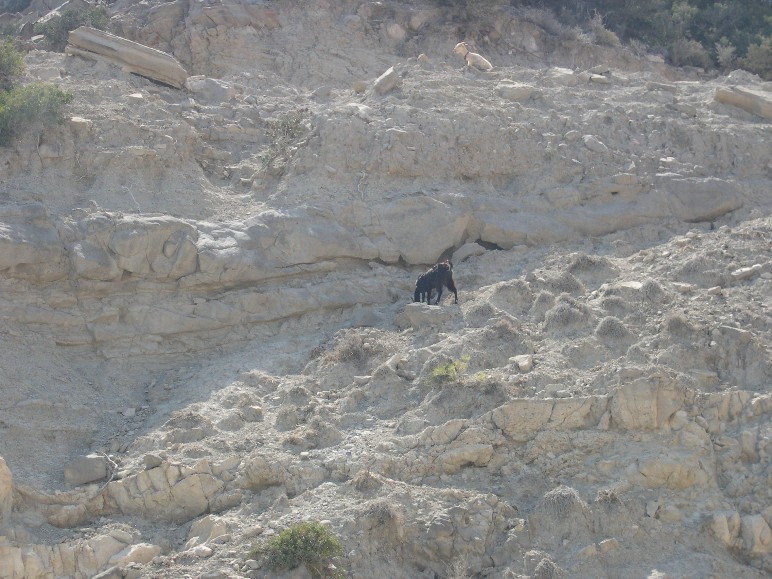
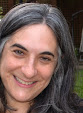
The first two photos here are from Crete, where people raise many goats in somewhat free range conditions.  At bottom, there's a photo of me making friends with a goat at a festival.  My husband, the professor, caught me talking to the goat and took my photo...about 12 years ago now!

Labels: , , , , , ,

Saturday, April 27, 2019

lead in the soil

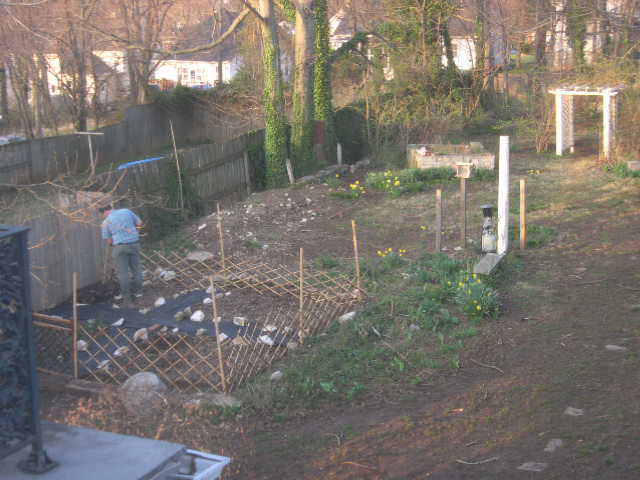
If you've been reading my blog for a long, long time, you may remember this post back in 2006, where I mentioned lead contamination in our yard in Kentucky.  This is a snapshot of our yard, including my Professor husband, setting out the paths in our very 'fancy' lead remediation so we could have a garden.

Around this time, in March 2006, I'd written a long, detailed article explaining how to deal with this lead contamination issue and what it meant for safety.  I could not get anyone to buy it!  However, I tucked it away. For years it bugged me because I really did want people to know about these issues.

Sad to say, heavy metal contamination isn't rare...it's relevant to Winnipeg, too.  My article came out today on the CBC-Manitoba website:
Time to stop kicking the can down the road on lead levels in Winnipeg's soil

I'm hoping someone in power will read it.  There's somebody at the U. of Manitoba in the School of the Environment who has the right equipment to test lead. There's plenty of public interest and people want to fix this problem so school kids can play during recess.  If they must sample more, they could dig samples, cover the costs of running the tests at the U of M, and have the answers very quickly.  If they can't afford a real remediation team with diggers?  I bet if you gave concerned citizens a chance, well, we'd be out there with our shovels to start the digging and we'd wear masks to avoid ingesting it.  This is just an unacceptable thing, to keep children from playing on their school field and to leave for someone else to deal with later.

In other, happier topics:  The sun was shining for a moment and we caught photos of a new design today!  I am excited about beginning to write it up.  No big reveal yet, but it solves the problem of portable knitting for those on the go but who want to make sweaters.  Hint: It is knit in seven (totally portable) pieces. There is sewing up at the end, but I don't mind sewing, so it works out ok!

Last but not least--please don't forget:
the Pembina Fibreshed is sponsoring my Spinners' Tasting class--it's a chance to sample mohair, silk and alpaca (and maybe more...)!  It's on Mother's Day, in the afternoon.
  Please consider signing up if you're a spinner in Winnipeg!

I'll leave you with a photo from Fiber Gathering so you can think about camelids (alpacas and llamas are camelids!) while you rush to sign up!

Here's a cashmere buck (that's a boy goat!), for good measure....

Labels: , , , , , , , , , , , ,

Monday, September 04, 2017

Getting their goat...


Here's my newest piece on the CBC:
Getting their goat: Manitoba Hydro could save money, energy with grazing animals

Other good news:
--My friends in Houston, mentioned in the last post, are ok.  Their home didn't flood and they are helping others whose homes have flooded.  I expect everyone in that area of the US will have some hair-raising stories to tell the rest of us.  (Perhaps more people will catch on to climate change now?  That it is a real thing?!)

--We picked some apples locally..but there weren't a lot this year because we had some bad caterpillar problems in the spring that ate many apple trees' blossoms and leaves. Thank you, Aurora Pizzeria, for letting us raid the unpicked apple trees in your patio garden!)

Yesterday, we drove out to Plum Ridge Farm, which is near Teulon, Manitoba.  (about 20 minutes from Gimli)  We came home with a lot of apples, plums, and cucumbers.  To give you an idea of how much?  Well, I've canned 14 pints of pickles (dills and bread & butter) today, about 9 lbs of cukes, but there is still maybe more than 5 lbs left.  We gave away two large bags of apples this morning, some crab apples last night and we still have so many that there is no room in the fridge for it all!  We've made some apple chips and applesauce already.  Chutney, frozen apple slices, and jams will happen too, I hope.

--Putting up food means there is more "fast food" off the shelf when it's cold this winter.  It's easy to make apple crumble, applesauce or pie when the apples are washed, cut up, and ready to go from the freezer.

--It's been hard to do any canning at all with two little boys home, but they will be starting Grade 1 at a new school on Wednesday.  Whew!  Very exciting stuff, but also, I know some guys are sort of nervous, too.  (I get that--I never slept before the first day of school either!)

--In an odd twist, I am not teaching at the Manitoba Fibre Festival this year.  I'd been scheduled to do one workshop, but not enough students signed up.  (too many spinning classes scheduled at once, perhaps?)  Anyhow, it ends up being a relief, because the Professor (aka, the twins' dad) is going to be away that week, so now I can just hang out with my guys.  I love teaching, don't get me wrong, but sometimes things just work out to make things easier, and I cannot complain about that!  Hopefully there will be other times to teach in the future...down the road.

Our air has been a bit smoky from fires burning in Northern Manitoba, and today, we've dodged a few thunderstorms, but we're all remarkably busy and cheerful, considering.  I will miss the warmth of summer but I'm also ready for little boys to be in school again. :)

It's also a little brisk...is it time to make and wear knits again soon?

 Pictured:
The Spire Smock (in Saffron)
Gigadistal (in Variegated blue/periwinkle)
Ploughed Acre Socks 


Labels: , , , , , , , , , , , ,

Sunday, September 13, 2009

spinning along

I'm stretching out this vacation (in my mind) for as long as I can this time!) That's because my daily life, while good, is full of things like laundry and house repairs and moving details. So, vacation is good. Let's keep talking about Crete!
It wouldn't be vacation without finding fiber arts things everywhere we went. Let's start with, say, spinning wheels. There aren't a lot of spinning wheels on Crete; it's not a strong part of their spinning tradition. Spindles are shown in museum exhibits, but not wheels. However, when we were in Chania, at the very end of our trip, we were shopping for knives. Cretan knives are well known for being nice tools, and for someone who cooks lots (me) a handmade paring knife or two is a great souvenir. That said, last time we focused on a bone handle--this time, we were happy to take plastic. Plastic is easier to clean, it's all recycled from something else, and the bone was a lot more expensive. We were paying for the knives when we saw this wheel behind the counter. The flyer and bobbin were on the floor next to the wheel and the cost? 250 Euros. It was a wheel I didn't need, but an antique spinning wheel, in any event!
Ok, now back to the goats... we left our car park in Myrtos (next to the goats) and took several driving trips. We went to Sitia, a city in Eastern Crete, one day. This is a pretty large, bustling place with a lot going on. Our first focus was olive oil--Sitia has some of the best in Crete-- and a good meal at the Balcony, a great restaurant. What we discovered was that the olive oil was available at the grocery store in Myrtos, so we didn't need to drive so far! The restaurant was nice, and...we found a yarn shop. We'd found others, but unfortunately, most are only open in the mornings, so I'd missed going into one. Crete mainly focuses on embroidery and lace crochet now, but I got some nice worsted weight cotton (like Tahki Cotton Classic) at a yarn shop in Sitia. I had the help of a kind Greek American woman who was also a tourist. She was from New York City, spoke very functional Greek and helped me get just the colors (navy and sage green) I wanted!
The trip was made entirely worthwhile by a super trip to a folklore museum in Sitia. I will post on that soon--it deserves its own post, it's an amazing museum.
When we left Myrtos, we chose to stop in a town called Kritsas. It was described as the "biggest village in Crete" and as having some nice arts and crafts. It was actually more of a town than a village, fairly touristy, but very picturesque. (click on all these photos to embiggen, it's worth it!)
As we walked through the town, we heard a sheep's baa and the professor caught a photo of this...looks like this farmer was either transporting these sheep to another farm or to market. They are hogtied, which means their legs are tied together, to prevent them from jumping out of the bed of the truck. The sheep didn't appreciate this (lots of baaas!) but it didn't hurt, from what I saw. It seemed like a logical way to transport sheep in this very hilly terrain. ..otherwise, they'd just leap right out of the truck bed! Also, one could note here that sheep on Crete are a special and primitive breed. Very tough, wily and clever, they provide milk, meat and wool--a true triple purpose breed.
There are lots of textile shops in Crete with embroidered table and bed linens--sadly, most of these aren't hand done anymore, and probably not made in Crete. However, as I walked up through the town, peering into the shops, I saw what could only be a distaff, loaded with wool, and a spindle. I rushed into that shop!

Most women on Crete don't spin or weave anymore. In fact, spinning and weaving were common on the island up until at least the '70's, but today, there's not much need for it anymore, with the improved availability of commercially made goods. However, this lady showed me with very little English, that she spun and wove for her own pleasure. When I showed her I too spun, she was tickled! She got out her handwoven blankets and sacks to show me. They were gorgeous! All single ply yarns, spun with the coarse wool of Crete.
When I tried her distaff and bottom wool spindle, I saw what well-made and beautiful tools they were. Well balanced, and handmade! She explained that they were hers, she had none for sale. She also showed me her handmade wool combs (a lot like Viking combs) that she used to process the wool herself. She did a beautiful job of that, too.
Before we left, she showed us another traditional skill. The cords used on handwoven sacks are braided/woven on a distaff like stick. The stick is tucked under one arm, and the little prongs or branches at the end are used to separate strands of yarn. The braiding is done with both hands free--this could obviously be done while walking or tending children.
I was sad that we didn't have enough language in common to talk further...but thrilled to see someone spinning for fun in Crete. What a universal language we spinners/knitters/fiber arts people have!
...more about the folklore museum next time...I'm off to make a traditional Southern cole slaw for the Biology picnic! (in Manitoba, it might seem exotic!)

Labels: , , , , , , , ,

Thursday, September 10, 2009

In my mind, I'm going to Crete...

If you're from, say, Virginia, and have a degree from UNC, it's hard to get away from James Taylor's Going to Carolina. So, oddly, when I found myself humming this song the other day while walking my dogs (at 6 AM), strange that I was thinking of Crete! Maybe that's because I'm still jetlagged, so a dark sidewalk at 6 AM feels like mid-day in my body...

OK, back to the trip. We left the big city and headed towards Myrtos, a small town on the south-east side of the island of Crete. This is what the parking lot looked like for our hotel. Note the goats... it was just a little walk down a couple of flights of steps to the beach.

You may wonder what you see on a long drive in Crete. Here are some of the sights. We took the biggest road in Crete, called the "National Road." It is usually somewhere between 2-4 lanes in both directions. There are fruit vendors and tavernas right alongside the road; easy to pull off and grab a coffee or an orange juice if you know where they are ahead of time. (big if, we didn't pull off once!) The driving on this highway is speedy like a racetrack with lots of twists and curves. We stuck to the very right side of the road! Other than this road, things are relatively unimproved. A lot of roads are paved, and may even have up to two lanes, but it's not uncommon to have goats on the road or have the whole road sort of peter out into a set of steps in a village.

The truck in front of us here on the road is filled with grapes for raisins. Crete produces a lot of raisins, and it's a really labor intensive process. We had the process explained to us in a museum, but it was much more real when we were behind this truck on the highway!

Summer is the dry season. Crete is very lush and green at other times of the year. However, when it is dry, it's easy to spot the furry inhabitants of Crete! This donkey was hanging out in a clearing right near a big intersection near the National Road. It was a very big donkey...it's hard to tell in this scenery, but he (she?) had some size on him!

Goats are often free range in Crete. This one was very high up on a mountain above the coast road near Myrtos--eating whatever greenery was left.

While we were in Myrtos, we spent time on the beach, swam in the sea, and ate well. There were open air tavernas along the beach, and it was a great spot to watch people go by. Evenings were especially wonderful. The children in town would set up plastic milk crate "stands" and put out pet rocks and trading cards "for sale." They played at shopkeeper and raced back and forth setting up stalls and taking them down. Then they got on their bikes, (all with training wheels) chasing each other (gently) up and down the pedestrian walk way, honking their horns and ringing their bells. Puppies and children ran up and down the beach, sometimes getting in one last swim. Best was the pair of little boys, one sporting sunglasses, who went fishing at dusk together. They didn't let the sunset or the dark get in the way of the sunglasses look!

We stopped along the highway to see these ancient mills. They've recreated how the mills worked along this road, so you can see how the wooden spokes would have turned the gristmill inside through windpower. Turns out wind power is a pretty ancient energy source! There are other mills on hillsides, but they lack the wooden spokes, so you need to know what to look for in terms of building shape when you glance up.
This historic site (and gift shop) was closed when we stopped on a Sunday, but still very picturesque. It was clear how the mills worked, as well. One of the other buildings was for sale, too! (need a new life? How about a grist mill in Crete?!)
Meanwhile, back in Manitoba, it looks like I am lining up some teaching opportunities for later this fall at a local yarn shop. Also trying madly to learn about how things work here--details about health care, car repair, chimney repair, eavestroughs...we're working flat out again on learning about life in Winnipeg. Still, it's nice to return to vacation "in my mind" on the blog. In my mind I'm going to Cre--e-te...can't you just feel the sunshine? Another post to come in a few days...

Labels: , , , ,

  • Check out my website here: www.joanneseiff.com
  • Sheep to Shawl
  • Dances with Wool
  • Carpe Diem!
  • Knitting Along the River
  • Getting Stitched on the Farm
  • Modeknit/Knitting Heretic
  • Pleasant & Delightful
  • Catena
  • Independent Stitch
  • Rosemary-go-round
  • Spin Dye Knit
  • Kentucky Arts Council
    In 2007, Joanne Seiff was awarded an Al Smith Fellowship in recognition of artistic excellence for professional artists in Kentucky through the Kentucky Arts Council, a state agency in the Commerce Cabinet, supported by state tax dollars and federal funding from the National Endowment for the Arts, which believes that a great nation deserves great art.

    Powered by Blogger